Chitrashala
Folk artists teaching their own form in classrooms — Madhubani, Warli, Gond, Pattachitra, Kalamkari.
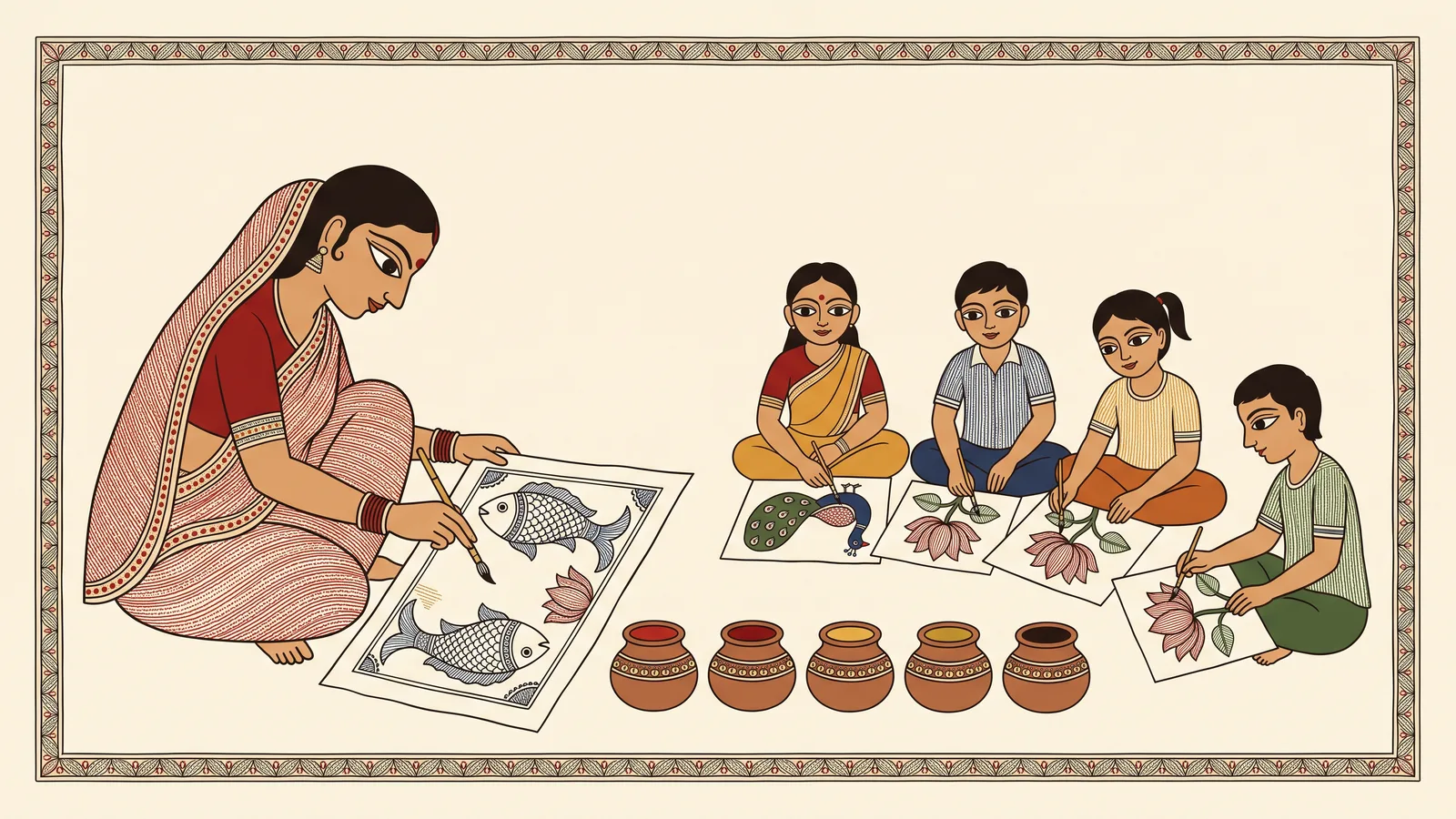
Chitrashala puts a practising folk artist in front of children — as a teacher, paid a teacher’s fee, for a form they have made their whole life.
The arrangement
An artist comes into a partner school for one week a month across a term. They teach the form they actually practise: how the pigment is made, what the motifs mean, which ones you may use and which belong to a particular occasion. Children make their own work throughout, and the term ends with the walls of the school painted by the children themselves.
Why it is taught by artists
We tried it the other way first, with trained teachers working from a manual. It produced competent decoration and taught nobody anything. The knowledge that matters here — why a fish, why that border, why you start from the centre — is not in the manual. It is in the person.
There is a second reason. These traditions are thinning because the economics stopped working; a Madhubani painter can rarely make a living painting Madhubani. Paying artists to teach is a small correction to that, and it puts the money where the knowledge is.
Forms we will begin with
- Madhubani / Mithila — Bihar
- Warli — Maharashtra
- Gond — Madhya Pradesh
- Pattachitra — Odisha
- Kalamkari — Andhra Pradesh
We are looking to add Kerala mural painting and Phad next. If you practise a folk form and would consider teaching it, tell us.