Our story
Five years of Prachyam, and then the obvious question
Folksutra is built by Kshitiz Rai and Abhishek Singh, the original team behind Prachyam. After more than five years of making world-class content about India's civilisational story, the question that would not go away was a simple one: who is making this for children?
01
What Prachyam taught us
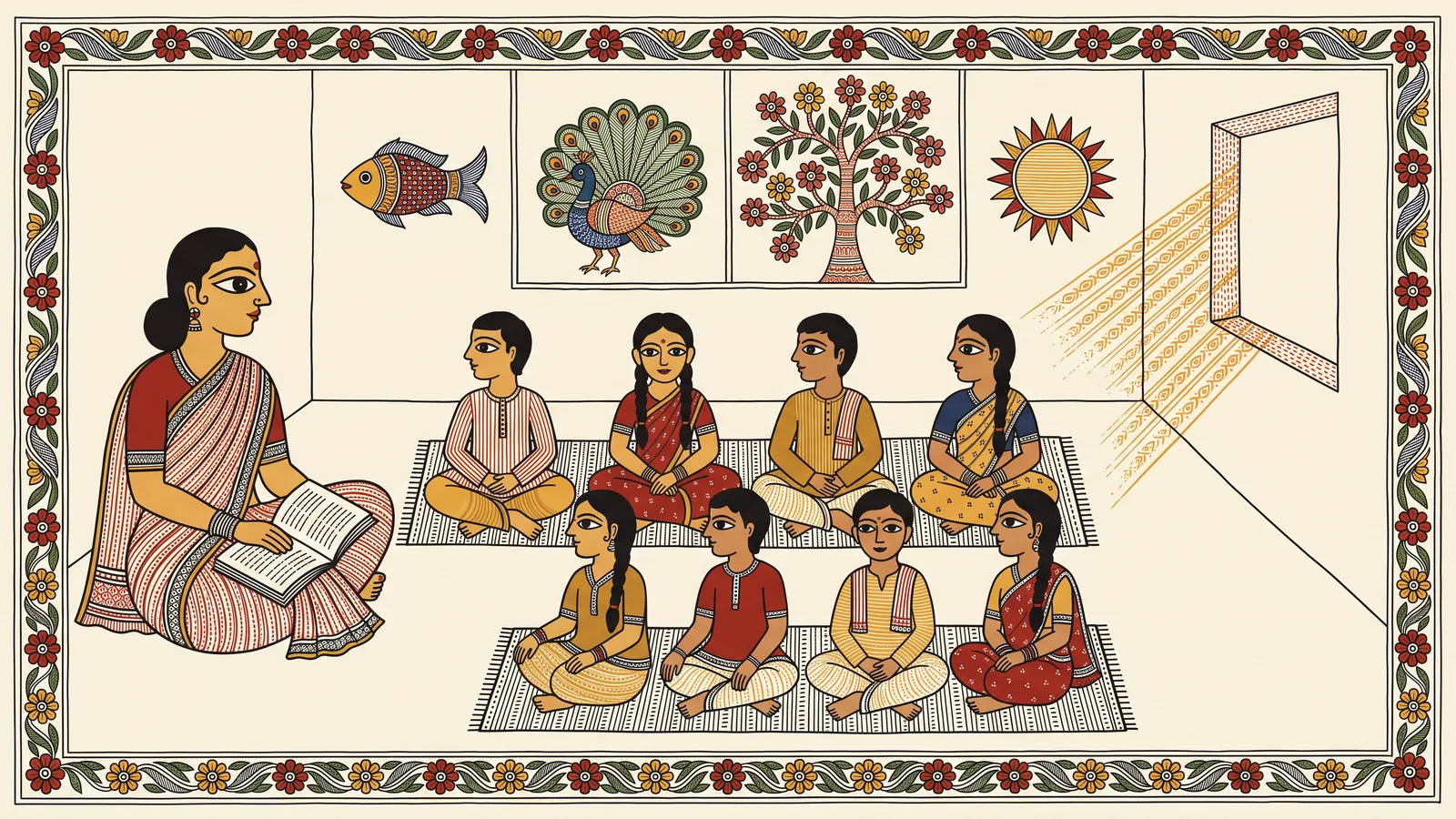
For more than five years we made content about India's own story for people who had already grown up. It found its audience. It also found its ceiling.
An adult who watches a film about their civilisation is being reminded. A child who grows up without it is being formed. By the time someone is old enough to go looking for this, the gap has already done its work — the vocabulary is missing, the reference points are missing, and what should have arrived as inheritance now has to be studied like a foreign subject.
02
The problem is old
India has never had a shortage of culture. It has had a shortage of transmission. A child can name a dozen superheroes and not one figure from the Panchatantra. The art made in their own district has no name they know.
This is not the child's failure and it is not the parent's. It is what happens when a culture stops being taught and starts being assumed. Every generation has noticed it. Very few have been able to do anything about it at scale, because the tools were never there.
03
The answer is new
Making world-class children's content used to take a studio, a decade, and money only a broadcaster had. Animation, music, voice, translation — each was its own bottleneck, and each one priced small teams out of the room.
That is no longer true. A small team with the right craft can now build animation, score it, and release it across many Indian languages at once. The problem has not changed. What has changed is that a handful of people can finally answer it properly — and answer it for free, made well, in the languages children actually speak at home.
Our values
What we hold to
Rooted
मूलWe teach the specific before the general — this district's art, this region's story, this child's mother tongue. Culture is local before it is national.
Living
जीवंतNot preservation. Children are taught to make, retell, and change these forms — because that is how they stayed alive for two thousand years.
Open
मुक्तOur curriculum is free and open to any school, any teacher, any language. We measure success in children reached, not in institutions controlled.
Honest
सत्यWe publish what works and what doesn't. A pilot that fails is written up the same as one that succeeds.
The team
The people doing it
Kshitiz Rai
Co-founder
Part of the original team behind Prachyam, and five years of making content about India's civilisational story. Folksutra is that work aimed at the audience it should have started with.
Abhishek Singh
Co-founder
Part of the original team behind Prachyam. Now building the studio that makes this material for children — properly made, free, and in their own languages.
Come and be part of it
Schools, teachers, artists, and funders — there is a way in for each of you.