What we got wrong in the first year
We promised to publish the failures alongside the wins. Here are four things that did not work, and what we changed.
We said at the outset that we would write up the pilots that failed the same way we write up the ones that worked. This is the first of those. Four things went wrong in year one.
1. Teaching art from a manual
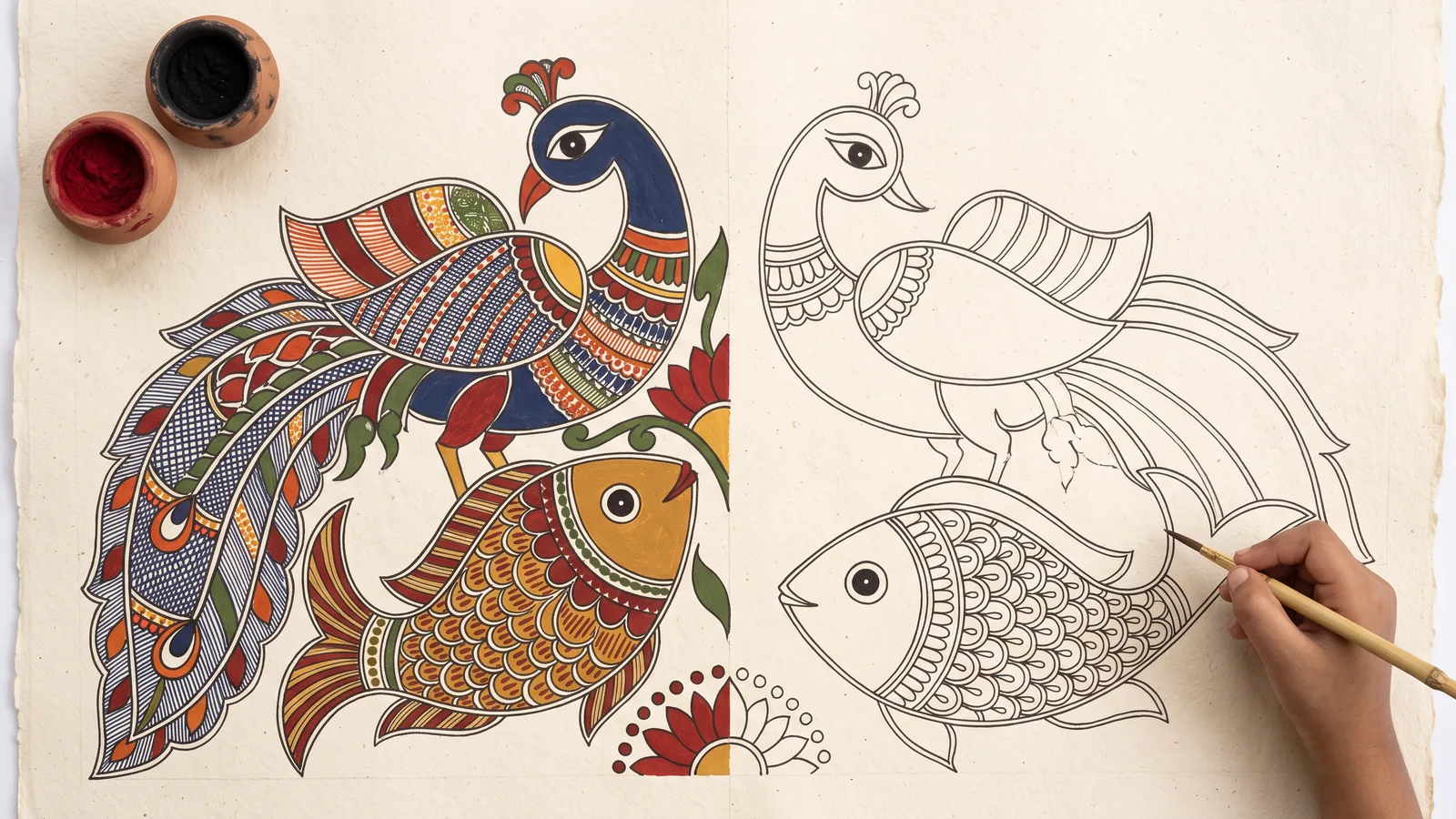
Our first Chitrashala pilot used trained teachers working from a printed guide, because it was cheaper and easier to scale than flying artists into villages.
It produced perfectly neat paintings and taught almost nothing. Children could copy a Madhubani border and could not tell you what any part of it meant, which motif belonged to a wedding, or why the composition starts from the centre. The knowledge is not written down anywhere, because it was never transmitted that way.
Changed: artists teach their own form, in person, paid a proper fee. It costs roughly four times as much and it is the only version that works.
2. Assuming the mother tongue was the easy part
We expected language work to be hardest in Sanskrit and simplest in the home language. The opposite happened. Children were fluent in Maithili and deeply embarrassed to use it in a classroom — it had been marked, by years of signalling, as the language you speak when you are not being serious.
Undoing that took most of a term and needed the teachers to go first, switching into the home language themselves in front of the class.
Changed: mother-tongue sessions now begin with the teacher’s own story in their own language.
3. Sending materials before training
For a stretch we shipped story cards and art kits to any school that asked, on the theory that material in a building is better than nothing.
We went back six months later and found most of it unopened. A teacher handed an unfamiliar box with no context does not have a spare afternoon to work out what it is for.
Changed: nothing ships until at least one teacher at the school has been through orientation.
4. Measuring the wrong thing
We spent the first two quarters counting children reached, which is a number that only goes up and tells you almost nothing. A school that ran two sessions and stopped counted the same as one that ran the programme all year.
Changed: the number we watch now is what share of trained teachers are still running the programme twelve months on. It is currently eighty-seven percent, and it is a much less flattering number to report — which is roughly the point.
There will be more of these. If you are running something similar and want to compare notes on what failed, write to us.
Written by Folksutra. Reply tofolksutra.official@gmail.com — we read everything.