The Panchatantra is not a morals textbook
Stripped to a one-line moral at the end, these stories die. Read whole, they are sharp, funny, and often deeply unsentimental about how power works.
Most Indian adults met the Panchatantra as a thin book of animal stories, each ending with a moral in italics. Be kind. Be honest. Do not trust strangers. It is a reasonable way to remember them and a very poor way to have read them.
The original is a manual on statecraft. It was composed to teach three inattentive princes how power actually behaves, and it is far more interested in cunning, alliance, and the management of dangerous people than in being nice.
What the moral leaves out
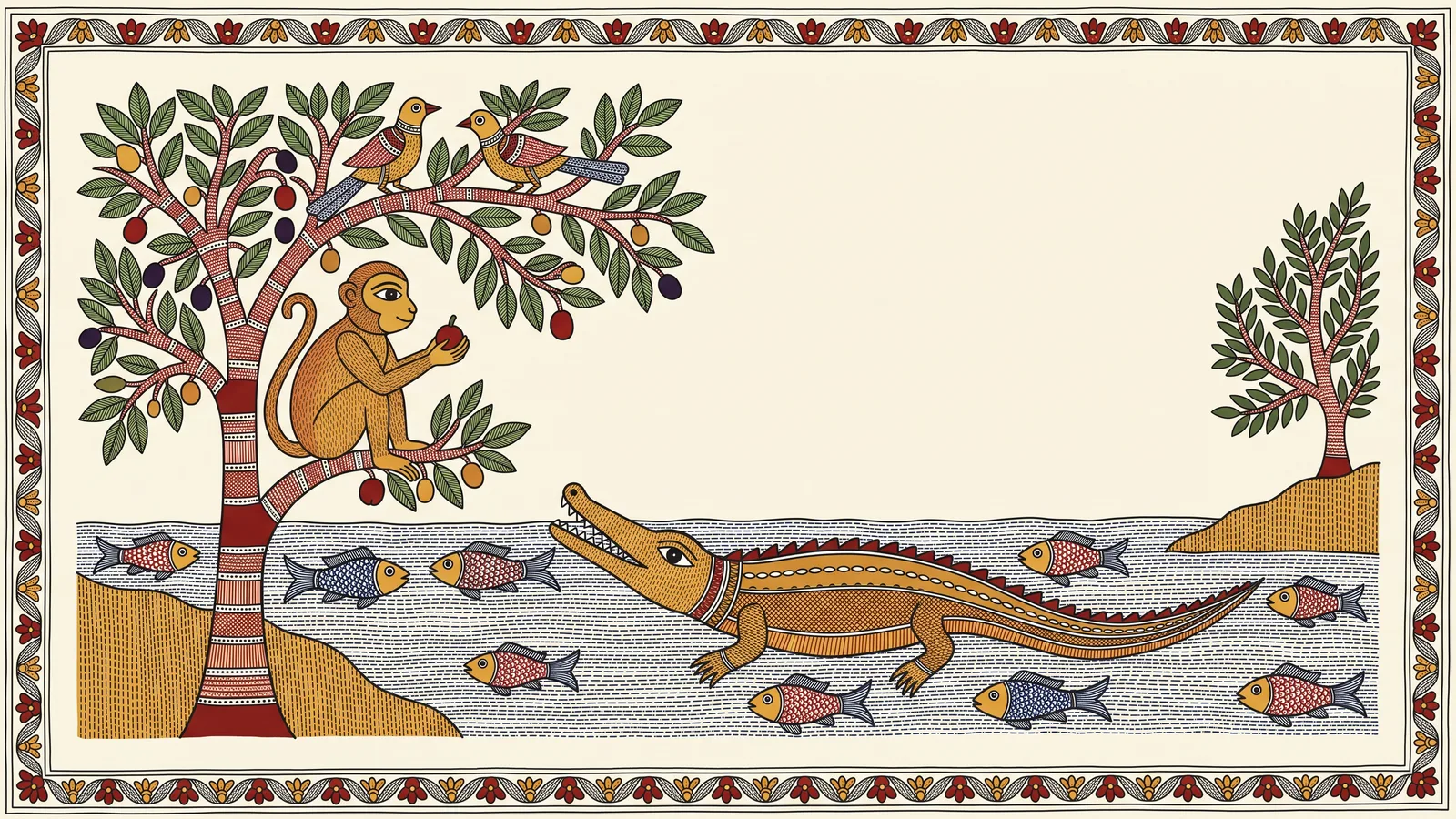
Take the monkey and the crocodile, which every child knows. The compressed version: crocodile befriends monkey, plots to take his heart, monkey escapes by claiming to have left his heart in the tree. Moral: presence of mind saves you.
Read whole, it is a story about a friendship that was never symmetrical, a betrayal driven by someone else’s appetite, and a victim who wins by understanding his attacker’s stupidity precisely. The monkey does not triumph because he is good. He triumphs because he has correctly assessed that the crocodile will believe an absurd thing if he wants it to be true.
Children find this far more interesting than “presence of mind saves you,” and they are right to.
What we do differently in class
Three rules, arrived at by trial:
Read it whole. No abridgement, no moral at the end. If the story is doing its job the class will supply the argument themselves.
Let them disagree with it. Some of these stories endorse things worth objecting to. A class that argues about whether the brahmin deserved what happened to him is a class that has actually read the story.
Keep the frame. The Panchatantra is stories inside stories — a character in one tale tells another to make a point. Abridgements cut the frame, and the frame is where the argument lives.
Why it matters for the larger project
If Bharatiya culture is presented to children as a set of improving lessons, they will file it with everything else adults tell them is good for them. The material does not need that treatment. It is genuinely sharp, frequently funny, and morally more complicated than the version most of us were handed.
A child who finds the Panchatantra clever will come back to it. A child who finds it worthy will not.
Written by Folksutra. Reply tofolksutra.official@gmail.com — we read everything.